
Why Sweep?
Before investigating how to sweep most effectively, it is important to understand why curlers sweep at all. Investigating the mechanisms through which sweeping acts can inform our practice, supporting the development of effective sweeping techniques.
Stone trajectory
Curling is a unique sport, in that after a thrower releases a stone, athletes can further impact the trajectory of the stone. Stone trajectory comprises of 2 aspects:
- Distance [longitudinal component].
- Curl [latitudinal component].
Sweeping the ice surface directly in front of a stone’s running path can affect both the curl and distance of a stone. We sweep in a way that we believe will provide the best possible outcome from the shot, through optimising stone trajectory.
Effects of sweeping
The only part of a curling stone in contact with the pebbled ice surface is the running band. This is a textured ring which protrudes due to the concave granite insert.
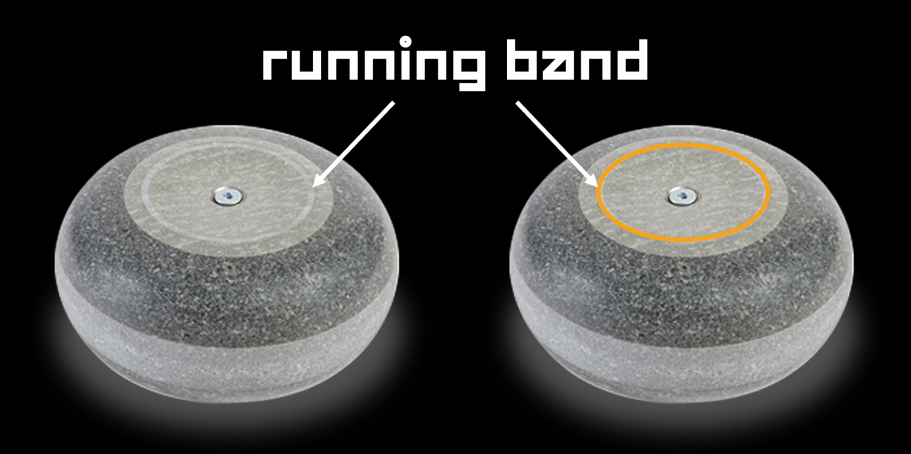
Canada Curling Stone Co
Sweeping alters stone trajectory through an effect pathway. Friction, caused by sweeping, causes changes to the ice surface. Therefore, the interaction between the ice and the stone running band is altered. This causes observable changes to stone trajectory.
In scientific research, the mechanisms behind sweeping’s effects upon the ice surface, ice-stone interactions, and stone trajectory have been attributed to several factors:
- Cleaning the path of the stone.
- Increasing ice temperature.
- Polishing the ice surface.
- Scratching the ice surface.
Cleaning
Cleaning a stone’s path is done with the desire of clearing debris and frost, allowing the stones trajectory to be unhindered by uncontrolled variables. The technique reduces the risk of pick-ups and decreases the effects of frost. Cleaning simply requires an athlete to run the broom directly in the path of a stone, with no intentions of altering stone trajectory significantly.
An evolution of cleaning is the ‘lean’, also referred to as the heavy or power clean. This technique involves running the broom in front of the stone with maximal vertical force. Based on anecdotal observations, leaning is thought to impact stone trajectory, whilst allowing athletes minimise their energy expenditure. This technique has been adopted by many elite players due to its efficiency, with sweepers being able to conserve energy over long games and events. However, research is needed to investigate the true effects that ‘leaning’ is having on the trajectory of stones.
Ice temperature
It has been demonstrated that the friction, caused by sweeping, increases ice temperature. This leads to a decrease in the friction coefficient between the ice and the stone, causing a stone’s trajectory to be lengthened.
The research also demonstrated that increases in ice temperature is the dominant mechanism in decreasing friction coefficient, when compared to other factors at play. This means it the most important to alter when trying to maximise the distance a stone travels. Effective sweeping should primarily aim to maximise heat generation, as opposed to focusing on other nuances.
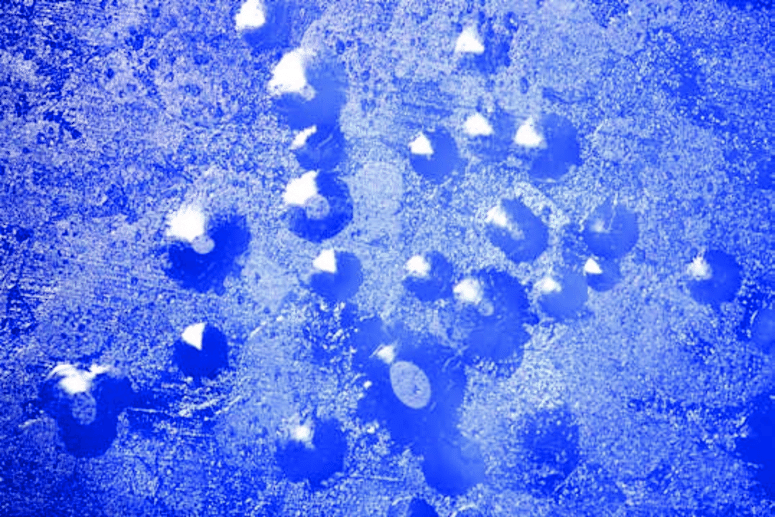
Lozowski et al. [2015]
Polishing
Polishing occurs when the friction from sweeping causes the ice surface to become more even and ‘smooth’, with lower surface roughness. This leads to a decrease in friction coefficient between the ice surface and a stone’s running band, and a longer eventual stone trajectory.
When compared to the impact of ice temperature increases, caused by sweeping, the impact of ice polishing has been demonstrated as negligible on ice-stone friction coefficients. This means it is likely not a dominant mechanism in altering stone trajectory and should not be the primary focus of sweeping.
Scratching
If you can create micro scratches in the immediate path of a curling stone, the lateral trajectory of the stone will be altered, according to the scratch-guide model. With the introduction of the World Curling Federation [WCF] broom device specifications, the effects of sweeping upon curl has been limited, since ‘aggressive’ sweeping materials can no longer be used.
Using ice topography analysis, researchers investigated the ice scratching effects of various broom pads, including the WCF-approved fabric. They found that the WCF-approved fabric created scratches comparable to some banned sweeping devices. The scratch depths were lower than those of hair brooms and some of the more ‘aggressive’ banned fabrics, which were previously seen to greatly alter stone curl.
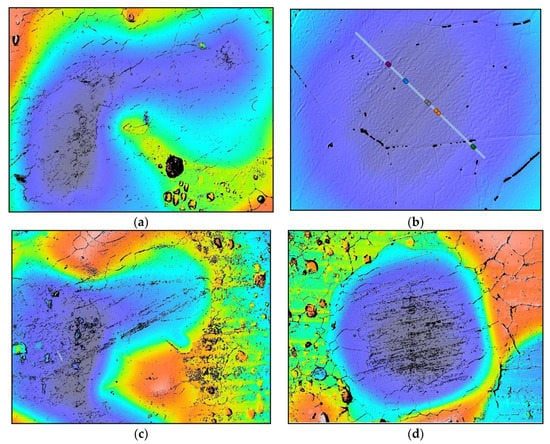
Balsdon and Wood [2020]
Since scratching with the WCF-approved fabric potentially remains feasible, I don’t think it can yet be fully ruled out as a contributing mechanism towards altering stone trajectory. More research is needed in this area, to confirm or refute existing theories, and I am keen to hear others’ opinions regarding this topic.
Directional sweeping
Several models exist to explain the mechanisms behind the lateral component [curl] of a stone’s trajectory. Being able to alter this is component is highly valuable in shot-making and directional sweeping is employed with the aim of doing achieving this.
With WCF-approved sweeping devices, the effects of directional sweeping appear to have been minimised. However, we still see elite athletes regularly sweeping for line and trying to alter the curl of stones. Directional sweeping remains a contentious topic, with many unproven theories being discussed and used in games. It appears that even top teams are not yet in agreement.
It is generally agreed that directional sweeping should induce an asymmetry in the ice-stone friction coefficient between the inside and outside edges of a stone’s running band, creating a lateral imbalance and lateral trajectory changes. People have attributed this to both temperature changes and scratching. However, no published research evidence yet exists to fully explain the mechanisms at play here. Multiple theories will remain until data is published regarding directional sweeping techniques.
Observed effects of directional sweeping have been seen to vary greatly with different sweepers, ice conditions, and stones. The majority of our evidence is anecdotal, based on the perceived effects of the sweeping we see. More quality research is certainly needed to improve our understanding of the topic and to help curlers to sweep with greater effectiveness.